Animation Blog Week 5: Colorful Characters
𝑹𝒆𝒅𝒆𝒔𝒊𝒈𝒏 𝒚𝒐𝒖𝒓 𝒍𝒐𝒈𝒐, 𝒘𝒆 𝒌𝒏𝒐𝒘 𝒘𝒉𝒂𝒕 𝒘𝒆'𝒓𝒆 𝒅𝒐𝒊𝒏𝒈, 𝑾𝒆 𝒂𝒓𝒆 𝒉𝒆𝒓𝒆 𝒕𝒐 𝒉𝒆𝒍𝒑 𝒚𝒐𝒖; 𝒆𝒗𝒆𝒓𝒚𝒕𝒉𝒊𝒏𝒈'𝒔 𝒄𝒐𝒏𝒏𝒆𝒄𝒕𝒆𝒅. 𝑻𝒊𝒎𝒆 𝒊𝒔 𝒐𝒇 𝒕𝒉𝒆 𝒆𝒔𝒔𝒆𝒏𝒄𝒆, 𝒘𝒆 𝒍𝒊𝒗𝒆 𝒊𝒏 𝒕𝒉𝒆 𝒇𝒖𝒕𝒖𝒓𝒆, 𝑪𝒐𝒍𝒐𝒓 𝒎𝒂𝒌𝒆𝒔 𝒖𝒔 𝒉𝒖𝒏𝒈𝒓𝒚; 𝒆𝒗𝒆𝒓𝒚𝒕𝒉𝒊𝒏𝒈'𝒔 𝒄𝒐𝒏𝒏𝒆𝒄𝒕𝒆𝒅. 𝑹𝒆𝒅𝒆𝒔𝒊𝒈𝒏 𝒚𝒐𝒖𝒓 𝒍𝒐𝒈𝒐, 𝒘𝒆 𝒌𝒏𝒐𝒘 𝒉𝒐𝒘 𝒕𝒐 𝒅𝒐 𝒊𝒕, 𝑴𝒂𝒌𝒆 𝒕𝒉𝒆 𝒄𝒂𝒍𝒄𝒖𝒍𝒂𝒕𝒊𝒐𝒏𝒔, 𝒑𝒖𝒕 𝒕𝒉𝒆𝒎 𝒊𝒏𝒕𝒐 𝒂𝒄𝒕𝒊𝒐𝒏, 𝑾𝒆 𝒘𝒊𝒍𝒍 𝒇𝒊𝒏𝒅 𝒕𝒉𝒆 𝒂𝒏𝒈𝒍𝒆, 𝒔𝒕𝒂𝒓𝒕𝒊𝒏𝒈 𝒘𝒊𝒕𝒉 𝒄𝒐𝒏𝒗𝒆𝒏𝒕𝒊𝒐𝒏 𝑶𝒏 𝒕𝒐 𝒊𝒏𝒏𝒐𝒗𝒂𝒕𝒊𝒐𝒏; 𝒆𝒗𝒆𝒓𝒚𝒕𝒉𝒊𝒏𝒈'𝒔 𝒄𝒐𝒏𝒏𝒆𝒄𝒕𝒆𝒅.AND WE'RE BACK!
Let's get grooving.

Thassright.
Welcome to the age of color animation.
This starts with additive 2-Strip Red-Green color...
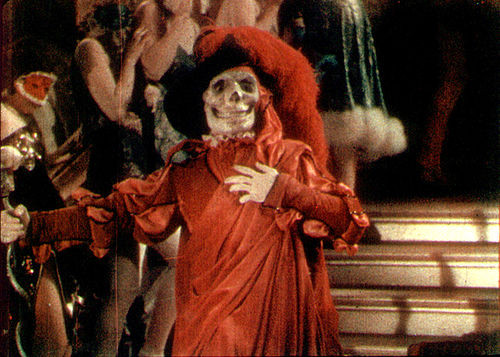
... All the way into subtractive 3-Strip RGB color in the 30's.
... Anyways, the big reason Technicolor specifically became so prevalent in this era, besides it's innovative processes, was the simple fact that Technicolor prints did not require any special projection equipment. Unlike the additive process, the projected image was not dimmed by a light-absorbing and obtrusive mosaic color filter layer.
Compared to competing subtractive systems, Technicolor simply offered the best balance between high image quality and speed of printing.

... So, that's pretty neat.
But, who was using this sort of technique at the time?
Wait...
No.
No no no.
No no NO WAIT-
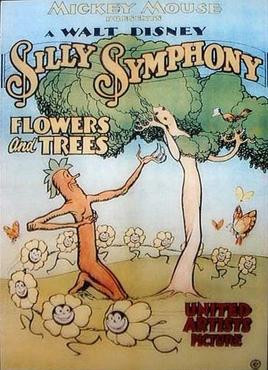
Kalmus (one of the co-founders of Technicolor) convinced Disney to shoot one of his Silly Symphony cartoons, Flowers and Trees (1932), in the new "three-strip" color process.
Seeing the potential in full-color Technicolor, (and once again demonstrating his d̶u̶b̶i̶o̶u̶s̶ b̶u̶s̶i̶n̶e̶s̶s̶ p̶r̶a̶c̶t̶i̶c̶e̶s̶ strategic business expertise), Disney negotiated an exclusive contract for the use of the process in animated films that extended to September 1935.
So, pretty much everyone else got screwed over.
Classic Disney.
Fleischer Studios and Ub Iwerks (Walt's former pal), were shut out, and had to settle for either the two-color Technicolor systems or use a competing process such as Cinecolor.
Flowers and Trees was a success, and as his reward for locking everyone else out of 3-color until 1935, Disney won the first Academy Award for Best Animated Short Film, and then a second one for The Three Little Pigs in 1933.
Finally for Disney in the 30's, the spectacular success of Snow White and the Seven Dwarfs (1937) (Which really should be Dwarves, C'mon.), led to the color animated film became the top-grossing movie of 1938, which was pretty much the nail in the coffin for commercial black-and-white animation going forwards.
Other than that, the previous trends in actual content pretty much remain constant, though they're built upon with the advent of new films and even more cartoon stars.
Let's get a headcount on the who's who of the 30's!

Betty Boop was one of the big names of the era, a caricature of a Jazz Age flapper.
Originally created as an anthropomorphic French poodle, she was changed to human, which was probably for the best, considering how uncanny the original feels.
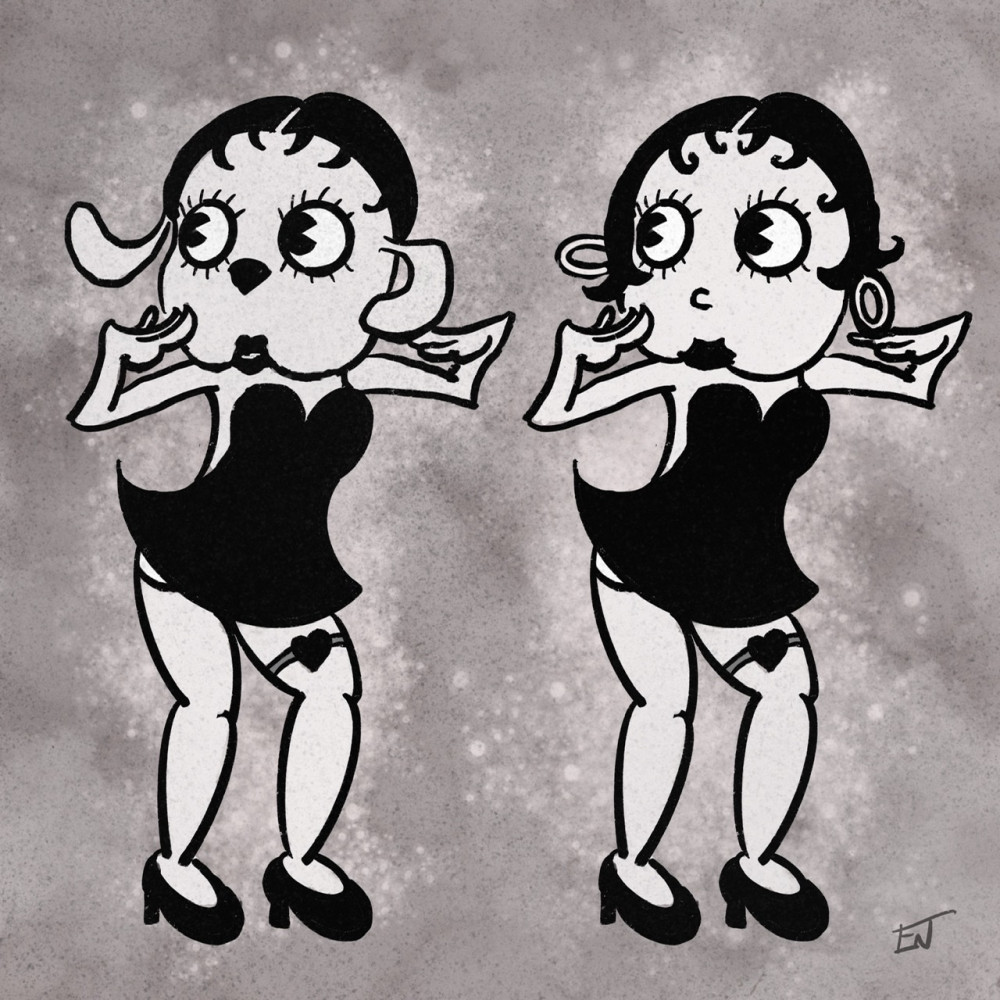
... Anyways, because people in the 30's couldn't handle the SHEER INDECENT SEX APPEAL of Betty, She was toned down in the mid-1930s as a result of the Hays Code to appear more modest.
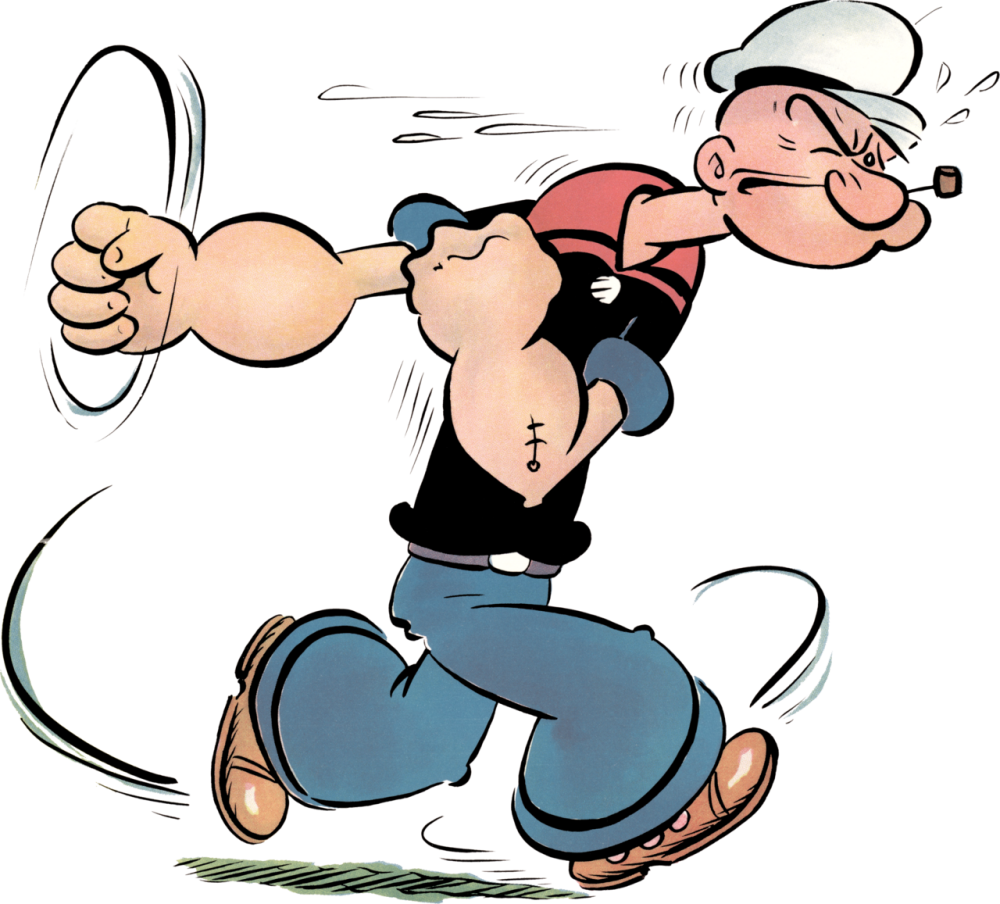
Popeye (The Sailor Man) originated in the comic strip Thimble Theater, which he promptly took over as the main character despite it already having been in syndication for ten entire years before his first appearance!
In 1933, Max Fleischer adapted the Thimble Theater characters into a series of Popeye the Sailor theatrical cartoon shorts for Paramount. These proved to be among the most popular cartoons of the 30s, and production of these shorts continued through 1957.
He's strong to the finish, and loves him some spinach, and is one of the poster boys for the modern power-scaling phenomenon known simply as "'Toon Force".
That didn't rhyme, but I thought it was interesting enough to point out.
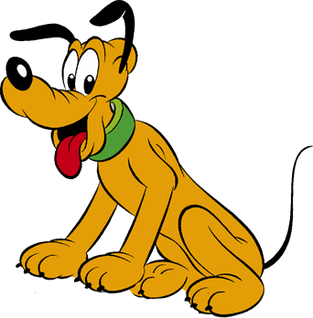
Pluto, Mickey's dog, originated in the 1930's in a Mickey Mouse short titled The Chain Gang, which is way more hardcore sounding than you'd expect from this precocious pooch.
He doesn't speak, so he's pretty much reliant on animated physical comedy.
Under current American copyright law, Pluto's earliest appearances will become public domain at the start of 2026.
Do with this what you will.

Goofy, Mickey's dog, originated in 1932's Mickey's Revue, where he was originally named "Dippy Dawg".
The name change came about probably because of acute cartoon brain damage causing permanent retrograde amnesia, forcing him to come up with a new identity while burdened with his particular manners of diction. Hence why he would take on the first moniker that others stuck to him, the cruelly-applied appellation "Goofy".
... Well, not officially. But that's my theory.
According to biographer Neal Gabler, Walt Disney disliked the d̶a̶m̶n̶a̶b̶l̶e̶ m̶u̶t̶t̶ Goofy cartoons, thinking they were merely "stupid cartoons with gags tied together" with no larger narrative or emotional engagement and a step backward to the early days of animation.
As such, he threatened constantly to terminate the d̶o̶g̶ series, but only continued it to provide make-work for his animators. ("Goofy Duty".)
... Anyways, have you ever noticed how weird it is that both Goofy and Pluto are ostensibly dogs, but Goofy gets to speak, wear clothes, and wasn't forcibly neutered at the veterinarians office?
... No?
Moving on...
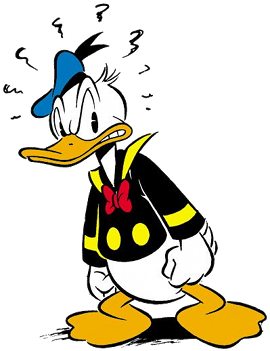
Donald "Fauntleroy" Duck first appeared in 1934's The Wise Little Hen, which I suppose is apt summation of his character: He is, in fact, not the hen in question, but a duck.
Donald is known for his semi-intelligible speech (which sounds like he's constantly being strangled to death), and his mischievous, temperamental, and pompous personality.
Donald has canonically served in WW2 (Propaganda), having been deployed in a High-Altitude Low-Opening Halo paramilitary insertion, and having completed several commando missions, earning him the rank of "Buck Sergeant" in the army and navy, and has his own cinematic (comic) universe most famously drawn by Al Taliaferro, Carl Barks, and Don Rosa.
In the Kingdom Hearts videogame chronology, he is also a powerful wizard capable of casting Zettaflare, a tier of magic usually reserved for the strongest summon in the Final Fantasy series, the dragon-god Bahamut, who usually only gets up to Megaflare.
In terms of metric prefixes, Mega (10^6) is significantly less than Zetta (10^21).
... I find all of this this hilarious, and mildly disturbing.
He has also appeared in more films than any other Disney character.
(Suck it, Mouse.)
... Anyways, I'd also like to mention Porky Pig, Daffy Duck, and Bugs Bunny as the other big Cartoon Stars to come out of this era, but I've got limited time to crunch, they weren't as heavily featured in our class presentations, and also I need to talk about WAR now, a topic of which Fauntleroy here allows me to pivot to perfectly.
So, without further ado...
An evil Mickey attacked Japan in 1936.
Let's back up a little.
In Japan, during the war, films were subject to controls as a means for popularizing the war effort.
According to the Film Law established in 1939, movie theaters were obligated to play newsreels of the war and related news as well as cultural films showing nature and the everyday lives of the Japanese.
So, you know.
More Propaganda.
Japanese animators were pretty much forced to work on these films or nothing at all. This led to them either giving in and embracing the messages they were forced to transmit, or beginning to carry a deep grudge and anti-war sentiment deep in their hearts that would influence later works such as Godzilla and early anime.
They even had to appropriate their own culture for the war effort, turning the tale of Momotaro into a bizarre piece about a child setting to sea with an army of suicidally patriotic animal companions to attack the evil Americans (depicted as ugly, brutish ogre-like figures).
So, yeah.
That was sure a thing.
Anyways, uh...
Propaganda bad, if you couldn't already tell.
Naughty government makes the silly animals commit war crimes.
Also, color is neat, but not when it's used to discriminate.
(Or start a monopoly. I'm looking at YOU, Walt.)
Anyways, I suppose that wraps this all up, so...

Tune in n̶e̶x̶t̶ w̶e̶e̶k̶ right now to hear about the next decade!