Animation Blog Week 4: The Roaring 20's
𝑨𝒏𝒅 𝑰 𝒔𝒉𝒂𝒍𝒍 𝒉𝒂𝒖𝒏𝒕, 𝑳𝒊𝒌𝒆 𝒕𝒉𝒆 𝑩𝒖𝒈𝒈𝒂𝒏𝒆, 𝑾𝒊𝒕𝒉 𝒔𝒖𝒄𝒉 𝒘𝒆𝒊𝒓𝒅 𝒏𝒐𝒊𝒔𝒆, 𝑨𝒏𝒅 𝒄𝒍𝒂𝒏𝒌𝒊𝒏𝒈 𝒄𝒉𝒂𝒊𝒏𝒔...Animation.
History.
Week 4.
I'm a little late with these, so this is going to be a bunch of back to back shenanigans for the next few posts.
I would be more concerned about this if I actually had an audience waiting to read these besides my professor.
Moving right along, (Doog-a-doon doog-a-doon)
Absolute Film.
What is absolute film?
It's a type of abstract film that focuses on "abstraction in motion".
Which is to say, it doesn't really look like anything, but it sure feels like it.
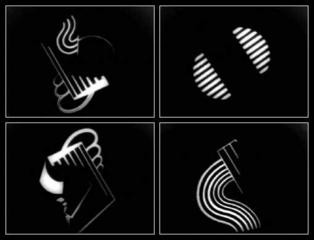
Sort of like how you feel when listening to music (which these animations are often accompanied by), or as Walter Ruttmann put it, "Painting in Time".
It's kind of hard to describe, so I'm just gonna link you some videos instead.
... Hope you got all that.
So yeah. Basically trippy music videos, but, like, for the 20's, without lyrics.
Viking Eggeling is a fun name to say.
Moving onto something a bit less colorful, but by no means less interesting, the works of Lotte Reiniger.
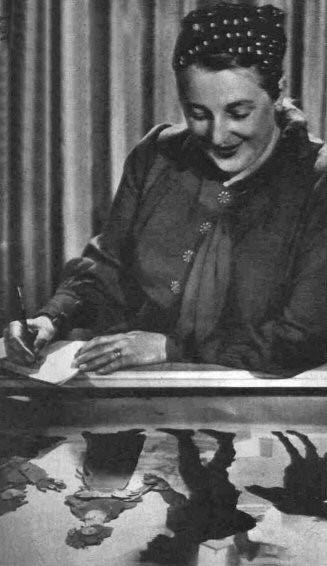
She's all about shadow puppets.
Silhouette animation, to be more precise.
And boy, was she good at it.
She liked to do fairy tales and other children's stories, was inspired by the art of chinese paper-cutting, and also invented the Multiplane Camera, one of the most important devices in pre-digital animation.
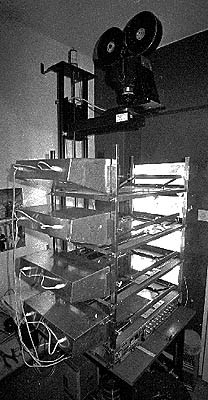
So yeah, she's kind of a big deal.
I'm not gonna waste your time with more humor on this one.
Just watch her stuff.
It's really good, in that pre-censorship Brothers Grimm type of way that Disney could NEVER.
Here's two of 'em to watch at your leisure.
... Hot damn.

I mean, what is there to say, even? This is just good art.
Put some respect on her name.
By the way, The Adventures of Prince Achmed is believed to be the oldest surviving feature-length animated film, debuting over a decade prior to Walt Disney's Snow White and the Seven Dwarfs.
(Which is not pluralized Dwarves as Tolkien Intended.)
It was actually predated by Argentine director Quirino Cristiani's The Apostol, released in 1917, but no copies of that film are known to survive, so... This is what we got.
And it does NOT disappoint.
Anyways, uh...
Guess we're going back to cartoons now.
Welcome to the era of Synchronized Sound.
It's exactly what you think it is.
Kinda like the Absolute Films above, but less abstract, and with more of a through-line plot.
Usually, cartoon characters sing along or play along with the music in-animation to emphasize it, so once again...
Basically music videos.
Here's the first one of them that historians have been able to trace, and if you've watched ANY old cartoons, you'll recognize the tune, because this sucker got referenced a LOT.
... Okay, some of the old lyrics have other meanings that could be interpreted unfortunately in the modern era, but it's not intentionally offensive. (Or funny, for that matter. Stop laughing.)
Fun Fact! The common practice of animating these old sound cartoons to music are where Looney Tunes, Merrie Melodies, and Silly Symphonies all originate their series names from.
Literally, they were all music-based cartoon series! (To start with.)
Another fun fact is that two of the people who were best known for working on these sound cartoons were the duo of Hugh Harman and Rudolf Ising.
Harman-Ising.
Get it? That's amusing serendipity right there!
... Anyways, I suppose we now have to talk about the semi-metaphorical elephant in the room.
Early Disney.
... Let me just level with you real quick.
I like animation.
I think it's really cool, and has some fascinating history behind it.
I am NOT a Disney guy.
I just... I just don't like him.
Or the company that persisted long after his death into the modern era.
On principle.
There are a number of reasons for this.
(Capitalism, Censorship, Cancellations, Imperialism, Intolerance, What it did to Culture, Propaganda, Allegations, Manipulation, Executive Meddling, Repression, Plagiarism, Poor Pay, Sweatshops, Working Conditions, Influence on Copyright Law, Lobbying, Stereotyping, Animal Cruelty, Monopolizing, Lawsuits and Litigations, Deaths, what they did to Marvel, Star Wars, The Muppets, etc, etc, etc.)
... But I digress.
This blog isn't really about that, which is why I've kept the ranting to a minimum.
... Where were we?
Oh, right.
The start of d̶a̶r̶k̶n̶e̶s̶s̶ Disney animation.
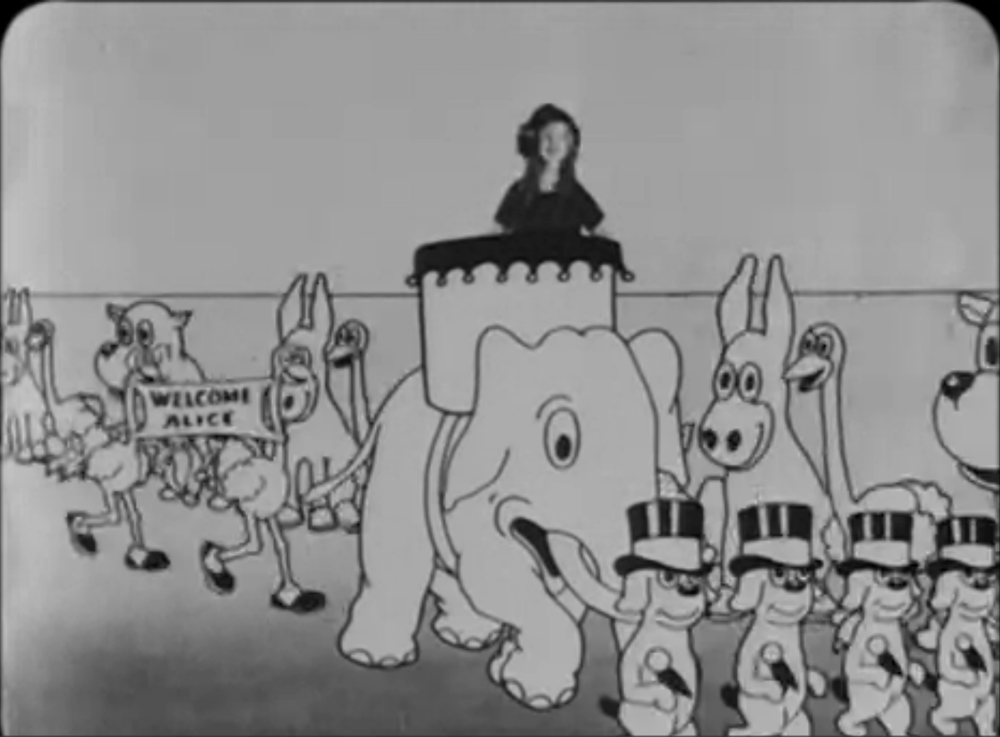
Alice's Wonderland. Or, the Alice comedies.
The first of many p̶l̶a̶g̶i̶a̶r̶i̶s̶m̶s̶ animated series!
Basically, he had cartoon characters interacting with a real live-action girl.
It sure was something.
Then came his first attempt at a recurring cartoon character.
M̶i̶c̶k̶e̶y̶ M̶o̶u̶s̶e̶!̶ Oswald the Lucky Rabbit!
He starred in a couple of shorts of his own!

... And then Disney lost Oswald's IP rights to Universal.
Which is not unlikely to have become part of the reason for his (and later his company's) obsession with that part of the law.
Never Again.
Anyways, time for a suspiciously similar substitute!
Mickey Mouse!

... "Steamboat Willie".
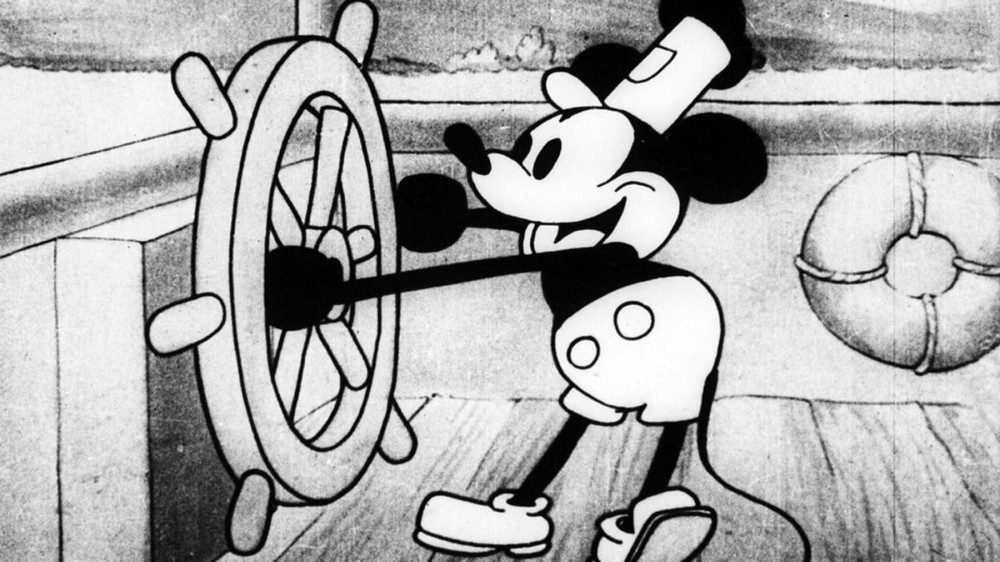
... There we go.
He's like Oswald!
But a Mouse! Because of the Ears!
And with Buttons! And Shoes!
He was originally going to be called Mortimer.
Do with that information what you will.
Also, both Oswald and Mickey were created/refined in part by Disney's artist at the time, Ub Iwerks.
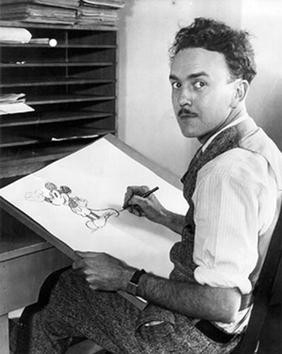
... Who doesn't usually receive nearly as much credit as he deserves, having worked with Disney pretty much from the beginning up until a falling out with Disney led to Iwerks's resignation from the studio in January 1930.
Funny, how that happens.
Anyways.
Besides Steamboat Willie, Ub was also responsible for such classics as The Skeleton Dance...
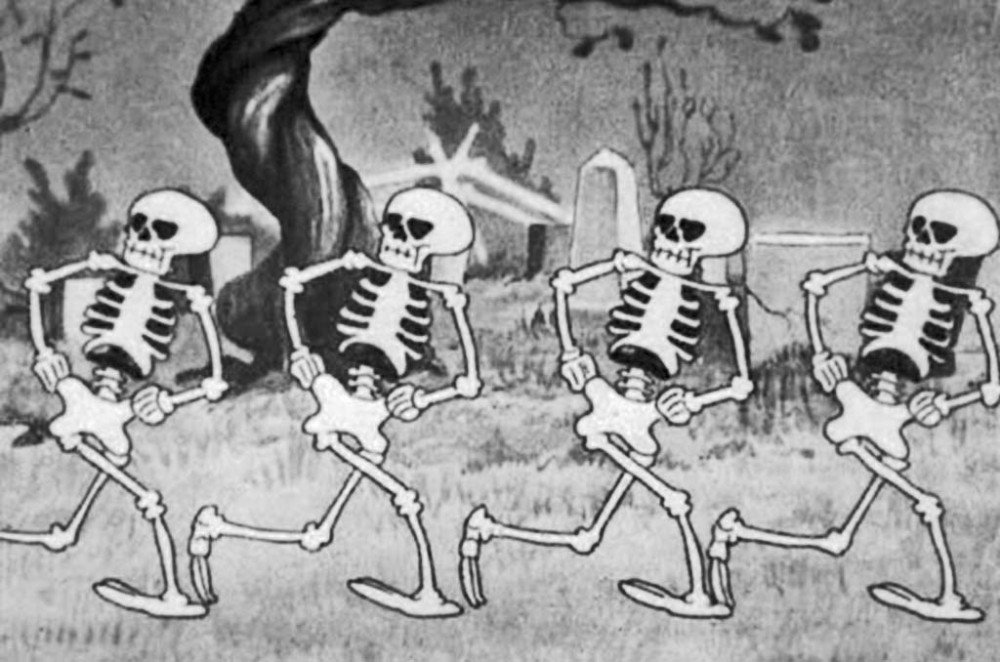
... Which wasn't originally paired with "Spooky Scary Skeletons", since the short came out in 1929, the music came out in 1996, and it was remixed into a video with the visuals from the short sometime in the late 2000's.
Your childhood was a lie.
Anyways, the First Looney Tunes, Bosko, the Talk Ink Kid!
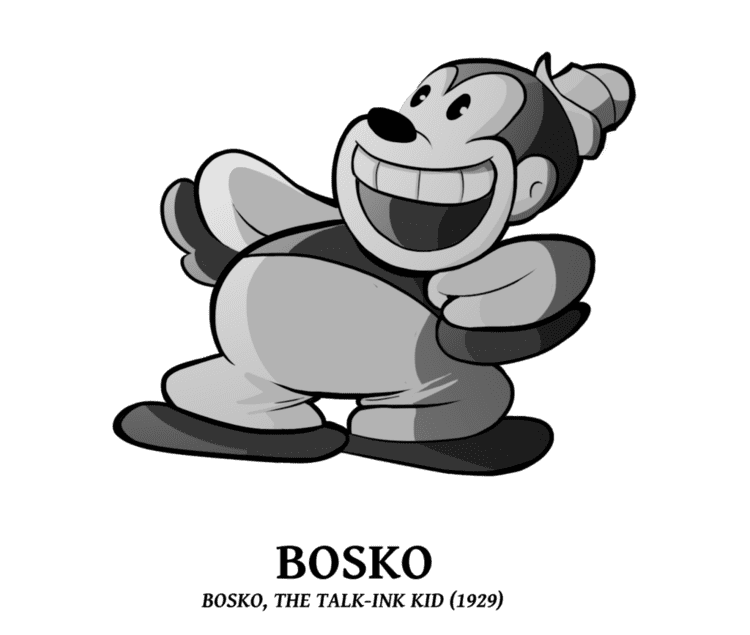
Created by Harman and Ising (you remember them from earlier, right?), Bosko was created in 1928 to capitalize on the recent success of talkies in the motion picture industry.
Hugh Harman made drawings of the new character and registered it with the U.S. Copyright Office on January 3, 1928.
The character was registered as a "Negro boy" under the name of Bosko.

... Anyways, In May 1929, they produced a short pilot cartoon, similar to Max Fleischer's Out of the Inkwell cartoons, titled Bosko, the Talk-Ink Kid that showcased their ability to animate soundtrack-synchronized speech and dancing. The short opens with live action footage of Ising at a drafting table. After he draws Bosko on the page, the character springs to life, talks, sings, dances, and plays the piano. Ising returns Bosko to the inkwell, and the short ends.
This was important because it emphasized dialogue.
The racially stereotyped accent and design not withstanding.
Bosko quotes include:
"I sho'done likes picnics."
"Mmmm! Dat sho' is fine!"
... In the later Looney Tunes shorts in which Bosko appeared, his accent was gone, instead using a falsetto voice. Consequently, his race became more ambiguous.
This has almost unanimously been considered a change for the best.
Obviously, Bosko was eventually retired. (1938)
But still.
Yikes.
So, uh...
Ofuji Noburo.
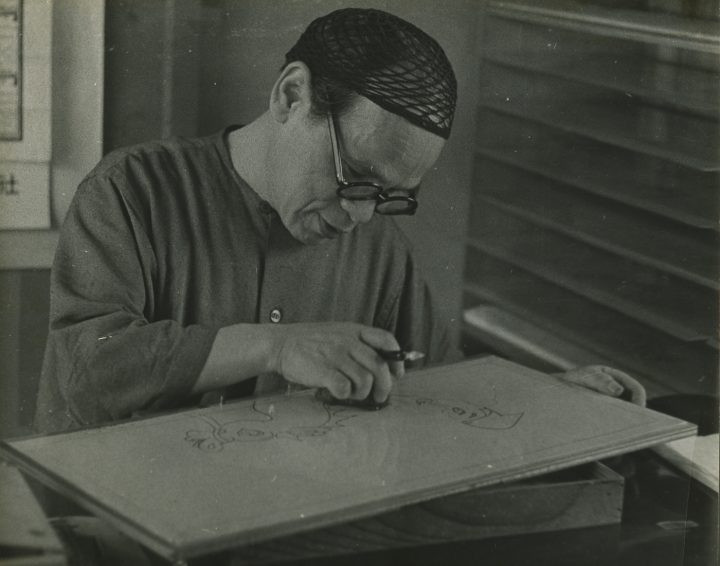
A Japanese animator, and one of the most notable auteurs of anime.
He did cutout and silhouette animations like Lotte until he was able to get his hands on then-expensive imported cels.
Notable animations by him include a live-action-animation hybrid called A Story of Tobbaco, and full animation pieces like A Ship of Oranges, Kimigayo, and Kujira.
He made a bunch of stuff, and was pretty prolific as an animator.
Generally a bit more adult leaning, but still important for the progress of Japanese animation, all things considered.
One of Anime's most prestigious awards is named after him.
So, that's pretty cool.
Also, like all old animation, a bunch of stuff gets destroyed in a fire/earthquake/etc. so there's only so much that survived to the modern day.
They really ought to get on top of that at some point.
Uh...
Conclusion Machine! Attack, Attack!
Tune in n̶e̶x̶t̶ w̶e̶e̶k̶ right now to check out my article on the '30's to the 40's!