Animation Blog Week 6: The Golden Age, an Iron Fan, and the Man of Steel
𝑻𝒉𝒆𝒓𝒆 𝒊𝒔 𝒂𝒏𝒈𝒆𝒓 𝒊𝒏 𝒕𝒉𝒊𝒔 𝒄𝒐𝒖𝒏𝒕𝒓𝒚, 𝑰𝒕 𝒇𝒊𝒍𝒍𝒔 𝒕𝒉𝒆 𝒉𝒆𝒂𝒓𝒕𝒔 𝒐𝒇 𝒕𝒉𝒆𝒔𝒆 𝒑𝒆𝒐𝒑𝒍𝒆, 𝑬𝒂𝒕𝒊𝒏𝒈 𝒘𝒊𝒕𝒉 𝒂𝒏𝒈𝒆𝒓, 𝑫𝒂𝒏𝒄𝒊𝒏𝒈 𝒘𝒊𝒕𝒉 𝒂𝒏𝒈𝒆𝒓, 𝑭𝒂𝒍𝒍𝒊𝒏𝒈 𝒊𝒏 𝒍𝒐𝒗𝒆, 𝑾𝒊𝒕𝒉 𝒆𝒂𝒄𝒉 𝒐𝒕𝒉𝒆𝒓 𝒘𝒊𝒕𝒉 𝒂𝒏𝒈𝒆𝒓...Animation!
Week!
SIX!

William "Norman" McLaren was a Scottish-Canadian animator, director and producer known for his work for the National Film Board of Canada.
He was a pioneer in a number of areas of animation and filmmaking, including hand-drawn animation, drawn animation, visual music, abstract film, pixilation and graphical sound.
He was also an artist and printmaker, and explored his interest in dance in his films.
Anyways, because he worked directly with an organization that would preserve his films, he's probably one of the best documented animators of this era. He's best remembered for his experiments with image and sound, having developed a number of groundbreaking techniques for combining and syncing animation with music.
He was also openly gay.
Good for him!
Anyways, watch this funky chicken he drew.
Chik-fil-A could never.
Up next on the docket...
... It's Disney, again.
*sigh*.
Y'know what?
I ain't writing all of that.
Just watch the same video I was provided.
... On the same page now?
Good.
You got Snow White, Bambi, Pinocchio, and D̶u̶m̶b̶a̶s̶s̶ Dumbo, and they all more or less made Disney money.
Disney kept up with the war propaganda, and started making "international" animations such as Saludos Amigos to help strengthen the ties between the countries of the Americas during WW2 because I guess people were worried about them entering on the other side.
These kinds of films might have been a bit iffy.
Also, as mentioned last time, Donald Duck went to war.
Moving on...
Princess Iron Fan!
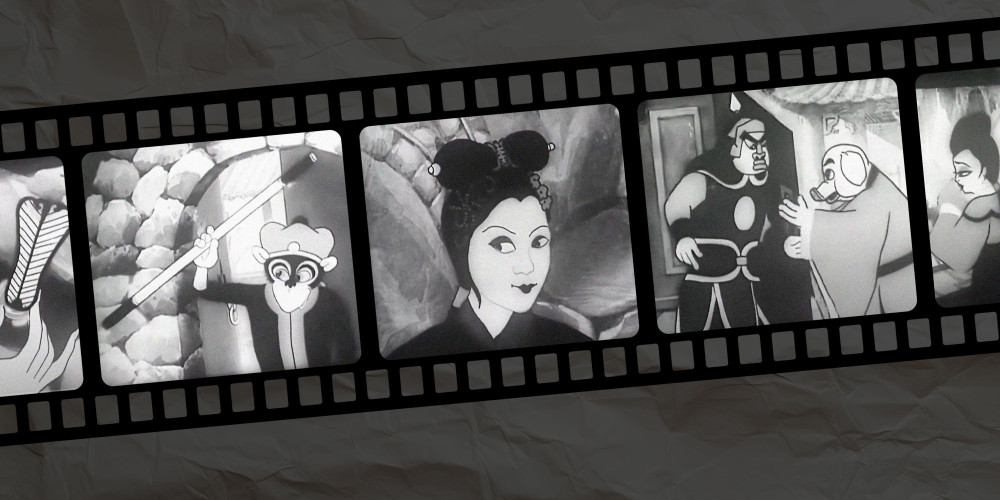
Princess Iron Fan was the first full-length Chinese (and asian) animated feature film.
It's based on an episode of the 16th-century novel Journey to the West. It was directed in Shanghai under difficult conditions in the thick of World War II by Wan Guchan and Wan Laiming (the Wan brothers) and was released on 19 November 1941.
It focuses on that one time Son Wukong (The Monkey King) fought a vengeful princess (helpfully named Iron Fan), whose fan was desperately needed to quench the flames that surround a peasant village. (In a Volcano!)
The Wan Bros. created this after seeing Snow White and the Seven Dwarfs (I STILL insist this should be Dwarves, btw), which spurred a desire to create a film of "equal quality" to defend their nation's honor.
Anyways, it became an instant hit and traveled to many other countries, inspiring generations of asian animators.
One more name to add to the list of those responsible for Anime.
And speaking of Japan...
You remember that Japanese wartime propaganda featuring Momotaro that I alluded to in the last blog post?
Yeah.
Momotaro's Sea Eagles!
It's peach-kickin' time.
Anyways, cute animals bomb Pearl Harbor.
Propaganda! Yaaay!
Anyways, it also had a sequel, Momotaro: Sacred Sailors, which was Japan's first real feature length animated film.
Osamu Tezuka, the father of Japanese manga and a later anime artist himself, said he was so impressed with these films as a teenager that he wanted to become an animator for a time.
One of the main creators of these animations, Seo Mitsuyo, was actually politically leftist, and early on, he was actually a member of the Proletarian Film League of Japan, where he helped out on such animated films as Sankichi no Kūchū Ryokō.
In 1931, he was arrested for his activities, tortured, and spent 21 days in jail, before being forced to create these films as part of the animation laws at the time.
After the war, Seo joined Nihon Manga Eigasha and made the film Ōsama no Shippo as a pro-democracy anime in 1949, but when Tōhō, which was supposed to distribute it, found it politically too leftist, the film was left without a distributor. Nihon Manga Eigasha went bankrupt, and Seo, finding the conditions for animation in the immediate postwar too difficult, left the industry and became an illustrator for children's books.
So that's fun.
Anyways, did you know Japan is also responsible for the Rankin/Bass Christmas Specials?
FROSTY AND RUDOLPH ARE ANIME.

... Yeah.
Now that you know, you can never unsee it.
The animation for these specials was outsourced to Japan. More specifically, to Mochinaga Tadahito.
Mochinaga actually started his career as Seo's assistant on the Momotaro propaganda films, which he was not particularly happy about. He once wrote:
"I heard that many youths volunteered for the flying corps and that while they were on duty they died on air raids. I wonder whether the film we made influenced their decision to volunteer... I thought, in the future I only wished to make a film that would benefit the young, difficult though that might be."
One day, after working on a barely-finished submarine based propaganda film, Mochinaga returned home to find it destroyed in a bombing raid. Foreseeing the end of the war and fearing the inevitable American occupation of Japan (that he suspected might involve purging propagandists, as well as forseeing food shortages), he fled with his pregnant wife to Japan-occupied Chinese Manchuria where they both had family.
There, he got a job at Man-Ei as a graphic artist.
Less than a month after moving to Manchuria, Japan surrendered.
So, good call by Mochinaga.
Dude saw the writing on the wall.
At one point, Mochinaga was assigned the task of animating a propaganda comic drawn by Hua Junwu.
You may recall that animation Cels at this time for Japan were expensive and had to be imported.
So, some animators made do with the next best thing: A camera, puppets, and Stop-Motion animation.
In order to save the paints, he built puppets and to save film, he shot it frame-by-frame instead of live.
This was a resounding success, as many in the region fondly remembered going to puppet shows.
Thus, Mochinaga accidentally popularized stop motion in China.
Whoops.
Anyways, WW2 propaganda led to Rudolph's shiny red nose.
So that's neat.
... Time to wrap things up with a classic.
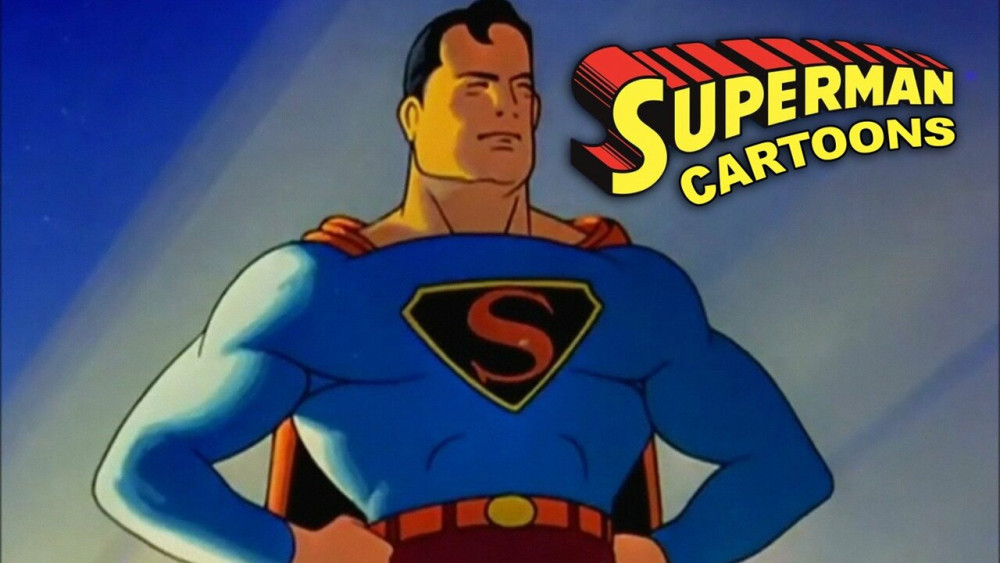
... Huh.
Turns out that Clark's glasses really weren't just for show.
Anyways, this is when we get our first animated superhero cartoon, Fleischer's 1941 Superman.
Based on the DC Comic Character of the same name, if you couldn't tell.
Paramount ordered 17 of these short films from Fleischer before we eventually got The New Adventures of Superman in 1966.
This was pretty standard early Superman fare, and pretty influential for both animated superhero and all Superman media going forward.
It had his origin story, Clark Kent, Lois Lane, Metropolis, The Daily Planet, and usually a villain of the week type of deal for Superman to easily deal with as soon as he got off his lazy behind to actually do so.
Since Fleischer had a bunch of less experienced animators at the time, they used Rotoscoping for the sequences they could, and more or less roughly winged it whenever Superman did something physically too difficult to Rotoscope.
This series was also the origin of the intro line "Faster than a speeding bullet! More powerful than a locomotive! Able to leap tall buildings in a single bound!", as well as the "Up in the Sky" phrase-catcher.
Fun facts! Not only did this series introduce the trope of Clark Kent using phone booths to change into costume to the Superman mythos, but was also responsible for giving Superman the iconic power of flight!
When the Fleischers started work on the series, the Superman of the comic books could only leap long distances. After seeing the leaping fully animated, however, the Fleischers deemed it "silly looking", and asked permission from Action Comics (later DC) to have him fly instead; they agreed.
Previously, he was only shown flying on the cover of Triumph #772, in "The Adventure of Superman" radio show and in the comics due to an artist and editorial error in Superman #10.
Finally, the flight power was adopted into the Superman comic books in 1943.
All because it looked dumb in motion otherwise!
Say thanks to animation for Superman not Mario-jumping everywhere, I guess.
So... Yeah.
That wraps it up for Week Six, and the Animation Blogathon!
Tune in next time for Week Seven, the Final Blog required for this Class!
So close, yet so far!
Until next time, true believers!
Expialidocious!